Themes
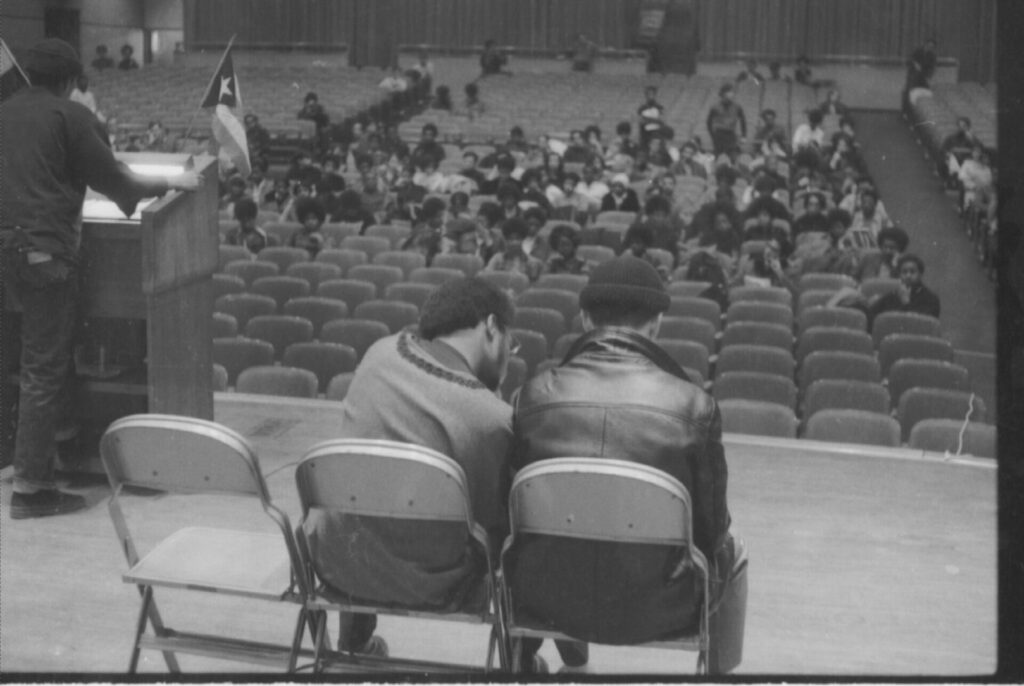
In Introduction to Cultural Anthropology, Spring 2026, we will organize and analyze our collective observations according to core anthropological themes we identify through the semester. Each theme will include readings from our syllabus that help us understand that topic.
Check back here for a table of contents.
Image Analysis Exercise
The above image, from 1969, shows Brooklyn College student activists from organizations including Brooklyn League of Afro-American Collegians (B.L.A.C.), the Puerto Rican Alliance (P.R.A.), and the Black Panther Party, at Brooklyn College. Activists pictured here include Orlando Pile and Askia Davis. Activists had gathered to commemorate Malcolm X Day and as part of an ongoing struggle to establish a department of Puerto Rican studies in Brooklyn College. Their struggle was successful: There is a Puerto Rican and Latinx Studies department at Brooklyn College to this day.
Discuss
- What do you observe?
- What questions would you ask to learn more about the people, occasion, and issues related to this image?
- If you could interview the student activists featured here, what questions would you ask?
- In our coursework, we discuss how “knowledge is power.” We learn that in colonial contexts, those in power often harm or destroy the knowledge systems of marginalized people, a process called “epistemicide.” Why do you think students were fighting for a Puerto Rican Studies department? How might this struggle relate to colonial dynamics and histories? Do you think “knowledge is power” relates to their struggle?
- What forms of knowledge do we encounter in CUNY today? How do teaching and learning relate to issues of educational access and inequality, race and racism, colonialism and epistemology?

This entry is licensed under a Creative Commons Attribution-NonCommercial-ShareAlike 4.0 International license.

