A collective CUNY ethnography

Built on the colonized homeland of the Lenape people (Lenapehoking), New York City is made of the labor of those who live here. It holds the many-layered heartbreaks and hopes of millions of people who have called it home.
Like New York City itself, the history of anthropology is built on colonial origins. But it, too, can be a space to dream: A practice that helps us learn about our communities and human society as a whole.
CUNY students, workers, and our communities come from all walks of life and every region of the world. Our communities are the people whose dreams and labor make the city run. Our imaginations and aspirations matter; they have the power to change the city and the world.
Participant observation can be a tool of transformation.
An ethnography is a study of a particular aspect of human life based on anthropological tools of observation and critical analysis. Ethnographies seek to understand how a particular group of people lives or engages in specific tasks together, in order to shed light on broader questions of human society such as: How do people divide labor? How do humans relate to other species? Where does social hierarchy come from?
Ethnographies are often written by a single author, but people can also team up to write them together. In our class, we are all anthropologists; we write as a team. As we move through the city, we take notice of daily life and the world around us as a way to learn about the factors that shape our experiences. This is called participant observation. In class, we write notes about our experiences commuting; these are called our fieldnotes.
At the end of the semester, students will break into small groups and identify common themes that emerge in their individual fieldnotes. We will combine our fieldnotes into a collective ethnography of commuting in New York City. This is an iterative project, meaning, multiple groups of students will engage with it over multiple semesters.
In undertaking this project, we engage anthropology as a tool not just to describe the world but to transform it. By connecting our observations to broader themes, we identify what we share with human beings across time and place, as well as what makes our cultures and communities unique.
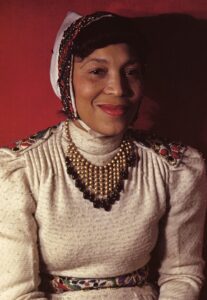
Throughout the site, you’ll also see images of our anthropological ancestors as well as historical photographs of CUNY community, with prompts for further discussion. Anthropologists study the past as well as the present, and photographs like this provide clues as to what life was like for people who came before us. What can we learn from the experiences of past CUNY students? What do we share with them, and how do our experiences differ?
Image Analysis Exercise
For example, in the top, black and white image on this page, which is from 1978, CUNY community members march down Lexington Avenue in Manhattan. They were on their way to the mayor’s residence at Gracie Mansion, in order to demand more resources for Hostos College.
CUNY students and community have a long and important history of advocating for New Yorkers’ collective ownership and control of the resources, spaces, and systems that make up our daily lives. Many people have expressed this concept in important ways. In anthropology, one way to express this is through CUNY anthropology professor David Harvey’s term, “the right to the city.”
Discuss
- What do we observe in the above image?
- What questions could we ask to better understand the people and history represented in the above image?
- What does the phrase “right to the city” mean to you?
- In our course, we discuss that we currently live in a capitalist mode of production with predominantly market-based exchange. How do this mode of production and exchange shape the issues of educational funding students raised in this historical march?
- Using tax dollars to fund an educational institution is an example of the redistributive mode of exchange. What is redistribution and how is CUNY an example of it? Do you think there is a tension between market and redistributive modes of exchange?
- What unique perspectives do we bring as CUNY student and worker ethnographers that can help all New Yorkers better understand our lives and city?
Header Image Credit
The header image for this site is by Wikipedia Commons user LBM1948, who photographed the 68th Street-Hunter College subway platform in 1997. CC BY-SA 4.0.

This entry is licensed under a Creative Commons Attribution-NonCommercial-ShareAlike 4.0 International license.


.jpg)